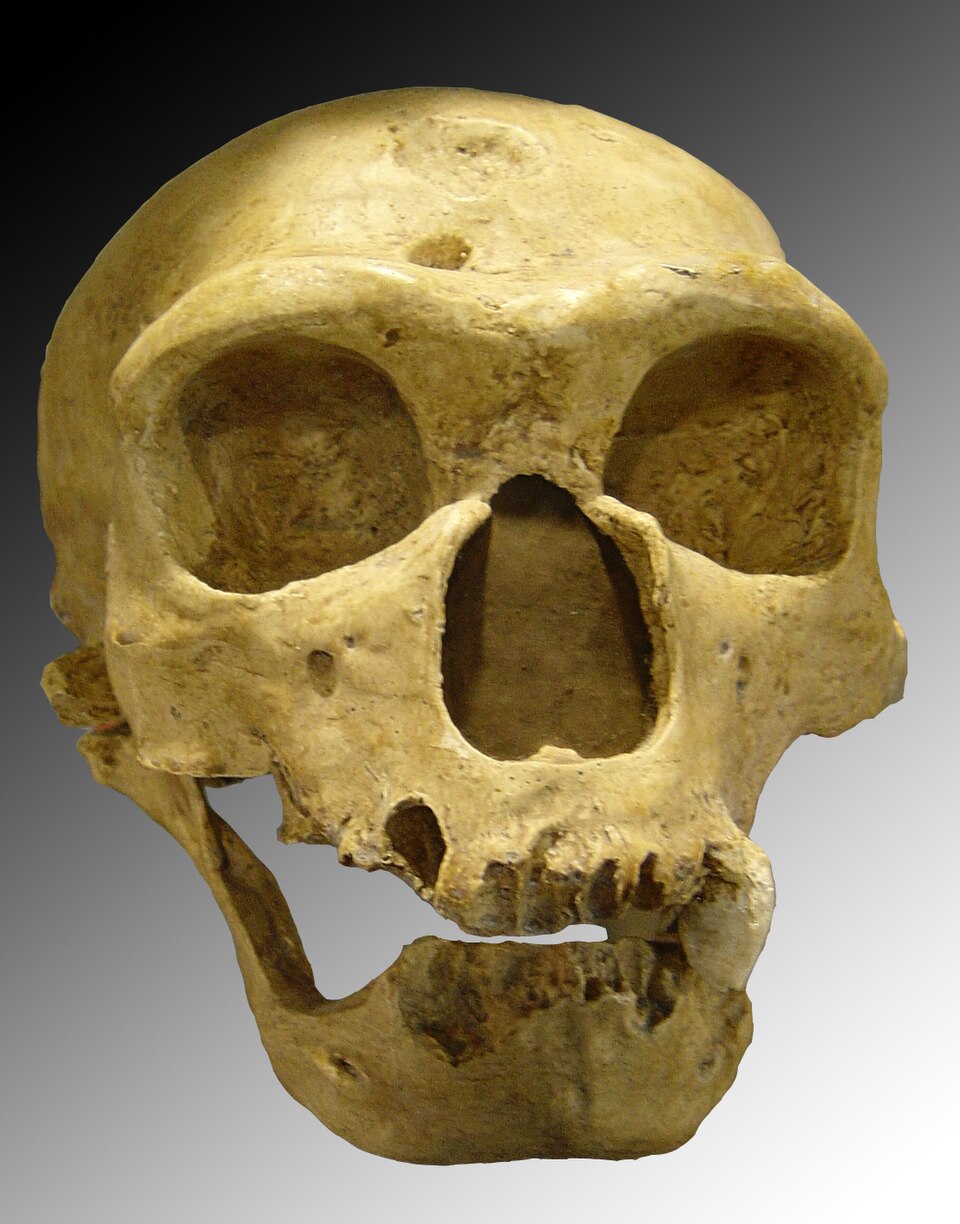
Researchers say a 75,000‑year‑old was killed by a wooden spear in what may be the earliest known spear attack.
Archaeologists report Shanidar A, a dated to about 75,000 years ago, bears a circular 15‑millimeter hole in the left shoulder blade consistent with a penetrating weapon wound.
The team says the wound entered the left side while the individual faced forward and shows the force and placement of an intended kill shot aimed toward the heart.
Shanidar A also shows signs of long-term care: a split tooth and other injuries that the researchers say required support to survive for at least a year after major trauma.
The body was placed deliberately in a tight cluster behind a large rock in Shanidar Cave, part of repeated burials that suggest intentional patterned behavior.
The findings, published in , are described by the lead author as evidence of both care and violence, though another archaeologist says the conclusions are bold and need more support.
Sources 2
- YOldest Known Spear Attack May Be Found in 75,000-Year-Old Neanderthal RemainsFri 16 Oct, 2:00am↗
Yahoo News Content : ScienceAlert : The Best in Science News and Amazing Breakthroughs
- ARemains may be earliest evidence of ancient human speared to deathFri 16 Oct, 2:00am↗
ABC News - Victoria Top Stories
Neanderthals are an extinct group of archaic humans who inhabited Europe and Western and Central Asia during the Middle to Late Pleistocene. The timeline of Neanderthal extinction is uncertain, but generally considered to be complete in Asia and most of Europe by 40,000 years ago, perhaps because early modern humans came to Europe. Neanderthals seem to have survived longer in some parts of the Iberian Peninsula.
Scientific Reports is a peer-reviewed open-access scientific mega journal published by Nature Portfolio, covering all areas of the natural sciences. The journal was established in 2011. Their aim is to assess solely the scientific validity of a submitted paper, rather than its perceived importance, significance, or impact.
More on United Kingdom