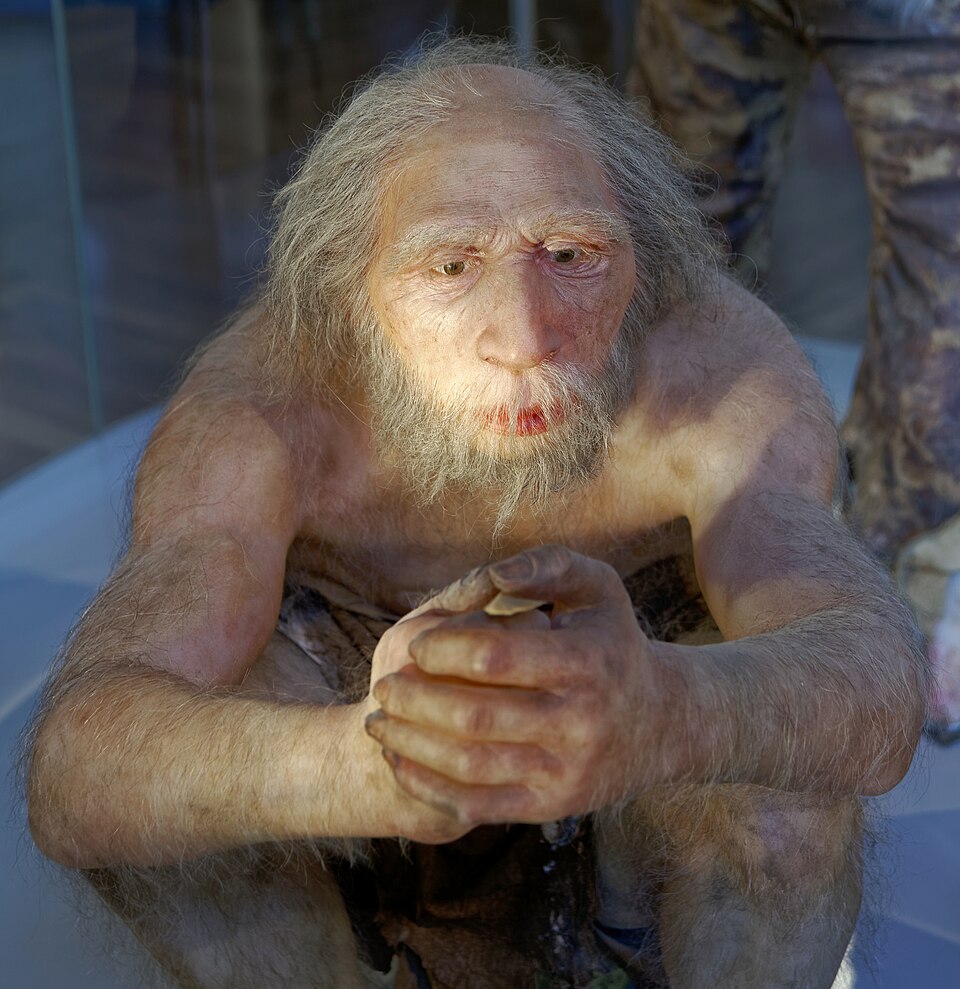
A DNA variant is linked to occipital-lobe size and lower schizophrenia risk.
The variant is a deletion of four DNA letters on chromosome 14, near DAAM1, a gene involved in brain development.
All five Neanderthals whose ancient DNA the researchers examined carried the deletion; neither of the two did.
The DNA stretch around the variant was nearly 60,000 letters long—longer than expected if it came from a common ancestor hundreds of thousands of years ago.
The researchers said that long stretch provided strong evidence the DNA entered modern humans more recently through interbreeding with Neanderthals, though it does not prove that origin.
Sources 1
- YA Gene Inherited From Neanderthals Is Still Shaping Human Brains – And May Affect Schizophrenia RiskTue 17 Nov, 7:00am↗
Yahoo News Content : ScienceAlert : The Best in Science News and Amazing Breakthroughs
- Y
The researchers then compared the variant with ancient DNA from five Neanderthals and two Denisovans, another extinct group of ancient humans
↗ - Y
The two Denisovans did not
↗
- Y
so if the deletion were inherited from a common ancestor hundreds of thousands of years ago, the surrounding DNA should be much more fragmented
↗ - Y
much longer than would be expected if it had been passed down from such a distant ancestor
↗
- Y
But this does not mean that the deletion necessarily came from Neanderthals
↗ - Y
One way to learn more is by looking at the region of the genome around the variant
↗ - Y
This provided strong evidence that the DNA had entered the modern human genome much more recently, through interbreeding with Neanderthals
↗
Neanderthals are an extinct group of archaic humans who inhabited Europe and Western and Central Asia during the Middle to Late Pleistocene. The timeline of Neanderthal extinction is uncertain, but generally considered to be complete in Asia and most of Europe by 40,000 years ago, perhaps because early modern humans came to Europe. Neanderthals seem to have survived longer in some parts of the Iberian Peninsula.
The Denisovans or Denisova hominins are an extinct species or subspecies of archaic human that ranged across Asia during the Middle to Late Pleistocene, approximately 200,000–32,000 years ago. Most of what is known about Denisovans comes from DNA evidence. While many recent fossils have been found and tentatively identified as Denisovan, the first Denisovans discovered were known from few physical remains. Consequently, no formal species name has been established. However, an analysis of the mitochondrial DNA and endogenous proteins from the Harbin cranium, which had been given the name Homo longi, showed that this skull represents a Denisovan. Analysis of protein sequences from the Xujiayao hominin fossils, which had been given the name Homo juluensis, indicated that these remains also likely represent Denisovans.