US economy grows fastest since the third quarter of 2023.
The US revised third-quarter growth to 4.3 per cent at a pace expressed as a yearly rate. Its figures also showed that inflation rose further in October.
The economy had grown at a 2.2 per cent rate in the April–June quarter. The new estimate raised third-quarter consumer-spending growth from 3.8 per cent to 4.2 per cent.
The revision also reflected stronger business investment, mostly related to artificial intelligence. Growth in business spending on equipment was raised from 20.9 per cent to 21.8 per cent.
Core inflation, which excludes food and energy, rose 3.3 per cent over the year to October, its largest increase since November 2023. The tracks this measure against its two per cent inflation target.
Financial markets had priced in a quarter percentage point interest-rate increase at the Federal Reserve’s December 8–9 meeting.
The story so far 4
OngoingFed Rate Hike- The US dollar stays near a 19-month high on Fed rate-hike expectations.
- U.S. consumer prices rose 0.4% in October, slower than September’s 0.6% rise.
- Fed minutes show officials expect more rate hikes to return inflation to 2%.
- You’ve just read thisUS economy grows fastest since the third quarter of 2023.
Sources 1
- PUS economy roars ahead in third quarterThu 26 Nov, 10:13am↗
perthnow.com.au
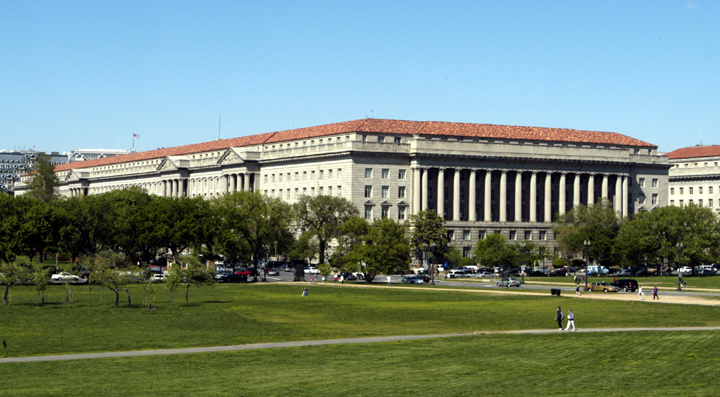
The United States Department of Commerce (DOC) is an executive department of the U.S. federal government. It is responsible for gathering data for business and governmental decision making, establishing industrial standards, catalyzing economic development, promoting foreign direct investment, and safeguarding national economic security.
The Federal Reserve System is the central banking system of the United States. It was created on December 23, 1913, with the enactment of the Federal Reserve Act, after a series of financial panics led to the desire for central control of the American monetary system. Although an instrument of the U.S. government, the Federal Reserve System is considered an independent central bank due to its structural insulation from political interference. Over the years, events such as the Great Depression in the 1930s and the Great Recession during the 2000s have led to the expansion of central bank's remit.
More on Jensen Huang