Canada seeks fresh US reviews of lumber subsidy and below-fair-value sale rates.
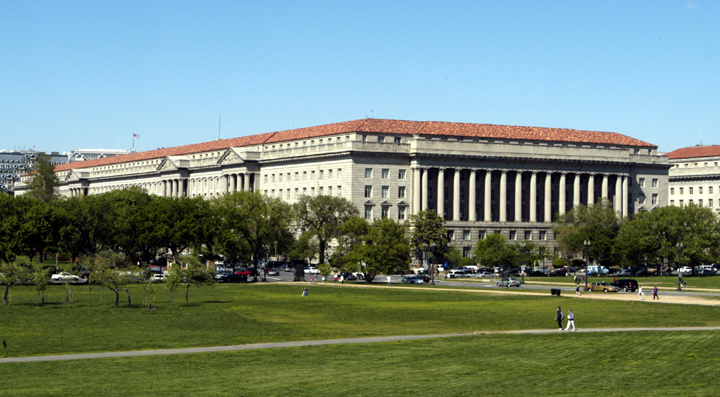
Canada and lumber producers have asked the to review rates on subsidies and alleged below-fair-value lumber sales, in the department’s seventh annual review. The rates determine what most mills pay at the US border.
Less than a fortnight earlier, the US upheld its findings in Canada’s previous case against duties first imposed in 2017.
Canada filed the subsidy challenge with five provinces: , , New Brunswick, and Québec. Several Canadian lumber companies and industry groups also joined the challenges.
Sources 1
About
Alberta is a province in Western Canada and is one of the three prairie provinces. Alberta is bordered by British Columbia to its west, Saskatchewan to its east, the Northwest Territories to its north, and the U.S. state of Montana to its south. Alberta and Saskatchewan are the only two landlocked provinces. The eastern part of the province is occupied by the Great Plains, while the western part borders the Rocky Mountains. The province has a predominantly continental climate, but seasonal temperatures tend to swing rapidly due to its aridity. Those swings are less pronounced in western Alberta because of its occasional Chinook winds. Alberta is Canada's fourth-largest province by area, at 661,848 square kilometres (255,541 sq mi), and the fourth-most populous, with 4,262,635 residents. Alberta's capital is Edmonton; its largest city is Calgary. The two cities are Alberta's largest census metropolitan areas. More than half of Albertans live in Edmonton or Calgary, which encourages a continuing rivalry between the two cities. English is the province's official language. In 2016, 76.0% of Albertans were anglophone, 1.8% were francophone, and 22.2% were allophone.
About
British Columbia is the westernmost province of Canada. Situated in the Pacific Northwest between the Pacific Ocean and the Rocky Mountains, the province has a diverse geography, with rugged landscapes that include rocky coastlines, sandy beaches, forests, lakes, mountains, inland deserts, and grassy plains. British Columbia borders the province of Alberta to the east; the territories of Yukon and Northwest Territories to the north; the US states of Washington, Idaho, and Montana to the south; and Alaska to the northwest. With an estimated population of 5.68 million in 2025, it is Canada's third-most populous province. The capital of British Columbia is Victoria, while the province's largest city is Vancouver. Vancouver and its suburbs together make up the third-largest metropolitan area in Canada, with the 2021 census recording 2.6 million people in Metro Vancouver. British Columbia is Canada's third-largest province by total area, after Quebec and Ontario.
About
Canada is a country in North America. Its ten provinces and three territories extend from the Atlantic Ocean to the Pacific Ocean and northward into the Arctic Ocean, making it the second-largest country by total area, with the longest coastline of any country. Its border with the United States is the longest international land border. The country is characterized by a wide range of both meteorologic and geological regions. With a population of over 41 million, it has widely varying population densities, with the majority residing in its urban areas and large areas being sparsely populated. Its capital is Ottawa and its three largest metropolitan areas are Toronto, Montreal, and Vancouver.
About
Ontario is the southernmost province of Canada. Located in Central Canada, Ontario is the country's most populous province. As of the 2021 Canadian census, it is home to over 14 million people, which is approximately 38.5% of the country's population. Ontario is the second-largest province by total area, after Quebec, and the fourth-largest jurisdiction of all the Canadian provinces and territories. Ontario's capital is Canada’s most populous city, Toronto. The province is additionally home to the country’s national capital, Ottawa.
About
The United States Department of Commerce (DOC) is an executive department of the U.S. federal government. It is responsible for gathering data for business and governmental decision making, establishing industrial standards, catalyzing economic development, promoting foreign direct investment, and safeguarding national economic security.
More on United States · Donald Trump · Canada