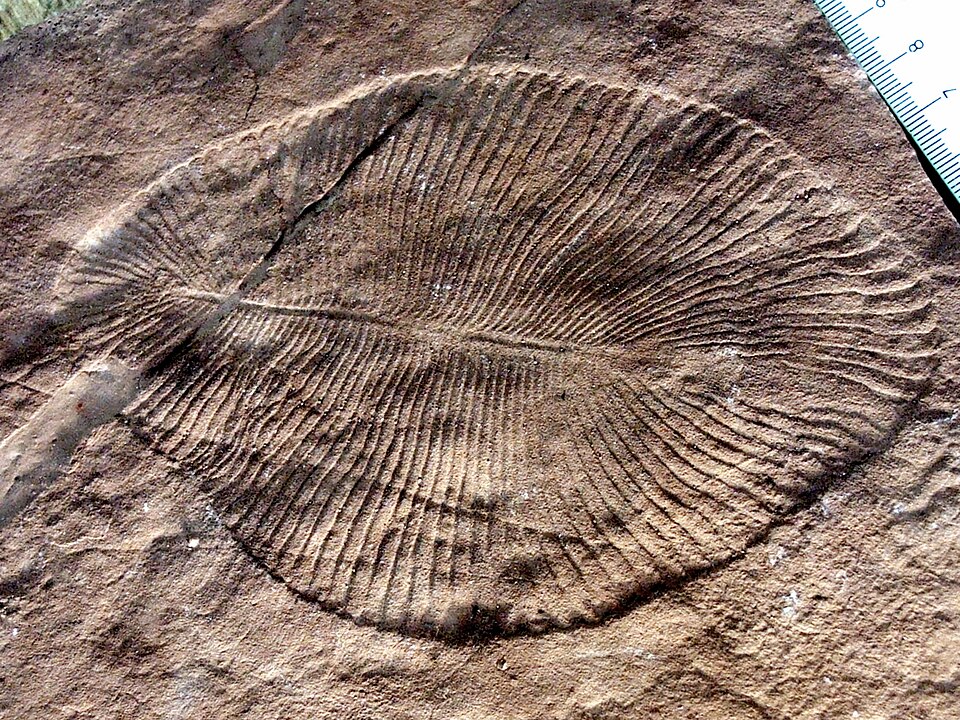
A study finds 280-meter-deep underwater canyons helped preserve ’s fossils.
In ’s , researchers found that ancient canyons and rising seas helped preserve fossils of organisms, which lived about 600 million years ago.
The underwater canyons reached 280 meters deep, and some stretched more than 6 kilometers across. They formed after sea levels fell, then filled with sediment when the seas rose and flooded the landscape.
The rising seas helped create a period of exceptional preservation for delicate impressions of soft-bodied organisms, which survive only under particularly suitable conditions.
The story so far 2
- Researchers find Flinders Ranges canyons helped preserve some of Earth’s earliest complex life.
- You’ve just read thisA study finds 280-meter-deep underwater canyons helped preserve South Australia’s Ediacaran fossils.
Sources 1
- YSecrets of Earth's Oldest Animals Preserved by Ancient Underwater Canyons, Study FindsSun 15 Nov, 11:00am↗
Yahoo News Content : ScienceAlert : The Best in Science News and Amazing Breakthroughs
- Y
the Ediacaran Period, about 600 million years ago
↗ - Y
The research focuses on rock formations from the Flinders Ranges in South Australia
↗
- Y
This revealed traces of colossal southeast-oriented canyons
↗ - Y
plunging to depths of 280 meters (919 feet)
↗ - Y
stretching more than 6 kilometers (3.7 miles) across in some places
↗ - Y
starting with a major decline in sea levels
↗ - Y
When sea levels later rose, the canyons filled with sediment as the landscape flooded
↗
- Y
Many Ediacaran fossils are preserved as delicate impressions of soft-bodied organisms
↗ - Y
Those kinds of fossils only survive when environmental conditions are just right
↗ - Y
Our work shows that the rise in sea levels played an important role in creating a window of exceptional preservation
↗
South Australia is a state in the southern central part of Australia. With a total land area of 984,314 square kilometres (380,046 sq mi), it is the fourth-largest of Australia's states and territories by area, which includes some of the most arid parts of the continent. It is the 17th-largest subdivision in the world and the fifth-largest in Australasia. It is the second-most highly centralised state in the nation after Western Australia, with more than 67% of the 1.9 million South Australians living in the capital Adelaide or its environs. Other population centres in the state are relatively small; Mount Gambier is the second-largest centre, with a population of 26,878.
The Ediacaran is a geological period of the Neoproterozoic Era that spans 96 million years from the end of the Cryogenian Period 635 million years ago to the beginning of the Cambrian Period 538.8 million years ago. It is the last period of the Proterozoic Eon as well as the last of the so-called "Precambrian supereon", before the beginning of the subsequent Cambrian Period marks the start of the Phanerozoic Eon, where recognizable fossil evidence of life becomes common.
The Flinders Ranges are the largest mountain ranges in South Australia, which starts about 200 km (125 mi) north of Adelaide. The ranges stretch for over 430 km (265 mi) from Port Pirie to Lake Callabonna.