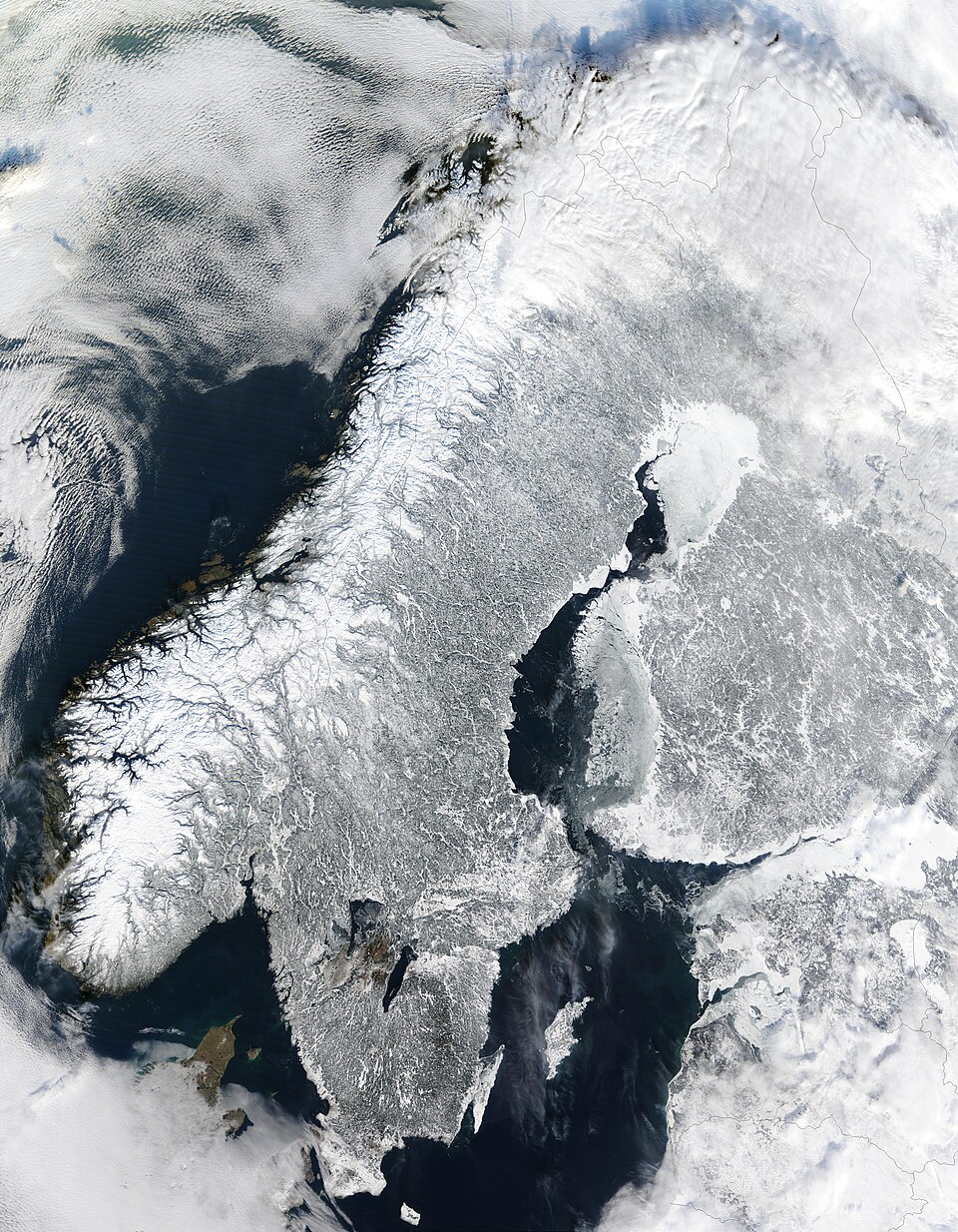
A study finds Earth’s cryosphere has moved beyond its planetary safe operating space.
The cryosphere—ice sheets, glaciers, sea ice, permafrost and snow cover—helps regulate ’s climate, water and carbon cycles.
Sea ice has shrunk beyond its historical range by an area 7.8 times the size of .
The study warns that cryosphere breakdown threatens communities, ecosystems and freshwater resources, and can accelerate sea-level rise, flooding and drought.
Sources 2
- GEarth's Frozen Systems Have Crossed an Alarming ThresholdFri 13 Nov, 6:00am↗
Gizmodo
- MCryosphere Decline Exceeds Safe Limits, Threatens SocietyThu 12 Nov, 11:00am↗
miragenews.com2 articles
1 more from miragenews.com
Earth's Cryosphere Still Within Safe Operating Space?Thu 12 Nov, 11:00am↗
- M
Their breakdown puts communities, ecosystems, and valuable freshwater resources at risk by accelerating global temperature, sea level rise, ecosystem degradation, and the likelihood of catastrophic flooding and drought events
↗ - G
the essential functions of the cryosphere are no longer within a “safe operating space,” meaning they are on a trajectory that locks in long-term risks for human societies and ecosystems
↗ - M
The research highlights that cryosphere degradation now poses increasing long-term risks to the planet, its ecosystems, and human societies
↗
About
Earth is the third planet from the Sun and the only astronomical object known to harbor life. This is made possible by Earth being an ocean world, the only one in the Solar System sustaining liquid surface water. Almost all of Earth's water is contained in its ocean, which covers 70.8% of Earth's crust. The remaining 29.2% of Earth's crust is dry land, which is predominantly located within Earth's land hemisphere in the form of continental landmasses. Most of Earth's land is at least somewhat humid and covered by vegetation, while large ice sheets at Earth's polar deserts retain more water than Earth's groundwater, lakes, rivers, and atmospheric water combined. Earth's crust consists of slowly moving tectonic plates, which interact to produce mountain ranges, volcanoes, and earthquakes. Earth has a liquid outer core that generates a magnetosphere capable of deflecting most of the destructive solar wind and cosmic radiation.
About
California is a state in the Western United States. It is bordered by Oregon to the north, the Mexican state of Baja California to the south, Nevada to the east, Arizona to the southeast, and the Pacific Ocean to the west. With a population of over 39 million across an area of 163,696 square miles (423,970 km2), it is the most populous U.S. state and the third largest by land area.
More on California · United Nations