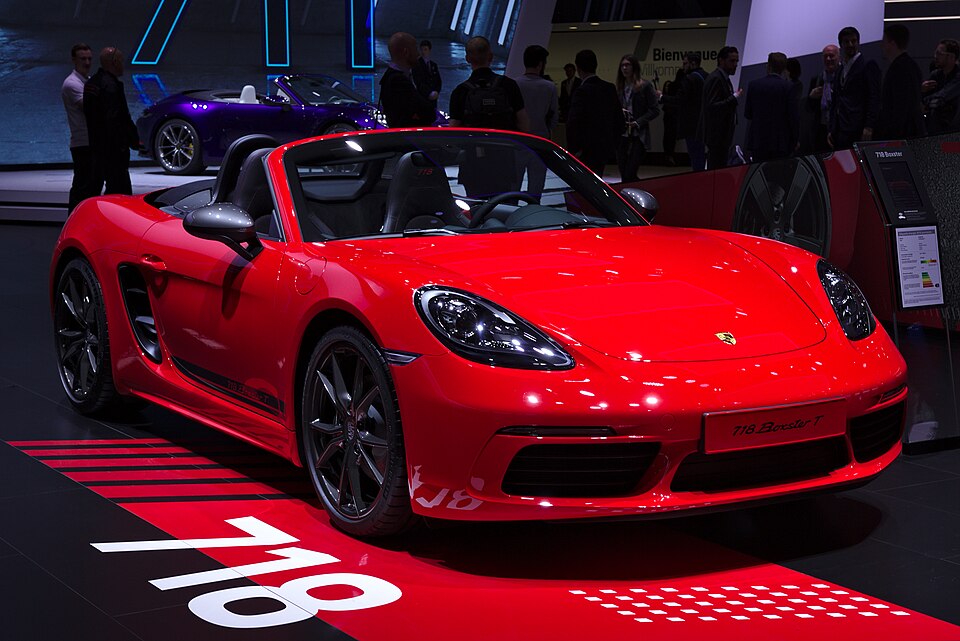
drops petrol 718 successors and will build a mid‑engined combustion hypercar.
says it will not produce petrol-powered versions of the upcoming 718 Boxster/Cayman, removing the previously planned top ICE derivatives from its new Sportwagenschmiede ‘35 strategy and announcing only electric 718s for 2027.
The company has released a short teaser and says the Mission S concept will preview a potential mid‑engined combustion-powered super sports car on October 15.
Porsche has revised its electrification goal: after aiming for more than 80 per cent BEV sales by 2030, it now plans for ICE and vehicles to outnumber EVs by two-to-one in the mid term.
The strategy change follows a painful 2025 when Porsche’s operating income fell 93 per cent, and it targets a 10-15 per cent return on sales while lowering break-even to 200,000 annual units.
Sources 1
Dr. Ing. h.c. F. Porsche AG, commonly known as Porsche, is a German automobile manufacturer specializing in luxury, high-performance sports cars, SUVs and sedans, headquartered in Stuttgart, Baden-Württemberg, Germany. The company is owned by Volkswagen AG, a controlling stake of which is owned by Porsche Automobil Holding SE, usually shortened to Porsche SE. Porsche's current lineup includes the 911, Boxster/Cayman, Panamera, Macan, Cayenne, and Taycan.
A plug-in hybrid electric vehicle (PHEV) or plug-in hybrid vehicle (PHV) is a type of hybrid electric vehicle equipped with a battery that can be recharged via a power cable to an external electric power source, in addition to charging internally by its on-board internal combustion engine–powered generator. While PHEVs are predominantly passenger cars, there are also plug-in hybrid variants of sports cars, commercial vehicles, vans, utility trucks, buses, trains, motorcycles, mopeds, military vehicles and boats.
More on United States · People's Republic of China · Germany