Percy Bishop’s 32-hour cyclone broadcast exposed six communities without emergency radio coverage.
Long-time community broadcaster Percy Bishop was live on air for 32 hours during Tropical Cyclone Narelle in March.
mainly reaches the island’s two largest remote communities, and , not harder-to-reach areas.
In remote parts of the island, mobile and internet connections are not assured during a storm.
Bishop wants the station better resourced and able to reach more communities, but whether and when upgrades will be funded remains undecided.
Sources 1
- ARemote NT broadcast 'hero' raises concerns about gaps in radio coverageSun 8 Nov, 9:34am↗
ABC News - Victoria Top Stories
- A
He wants the local radio station, which is an independent organisation but receives the bulk of its funding via Groote Eylandt's Anindilyakwa Land Council (ALC), to be better resourced
↗ - A
it is yet to be seen if and when the ALC will fund the upgrades requested by Groote Broadcasting
↗
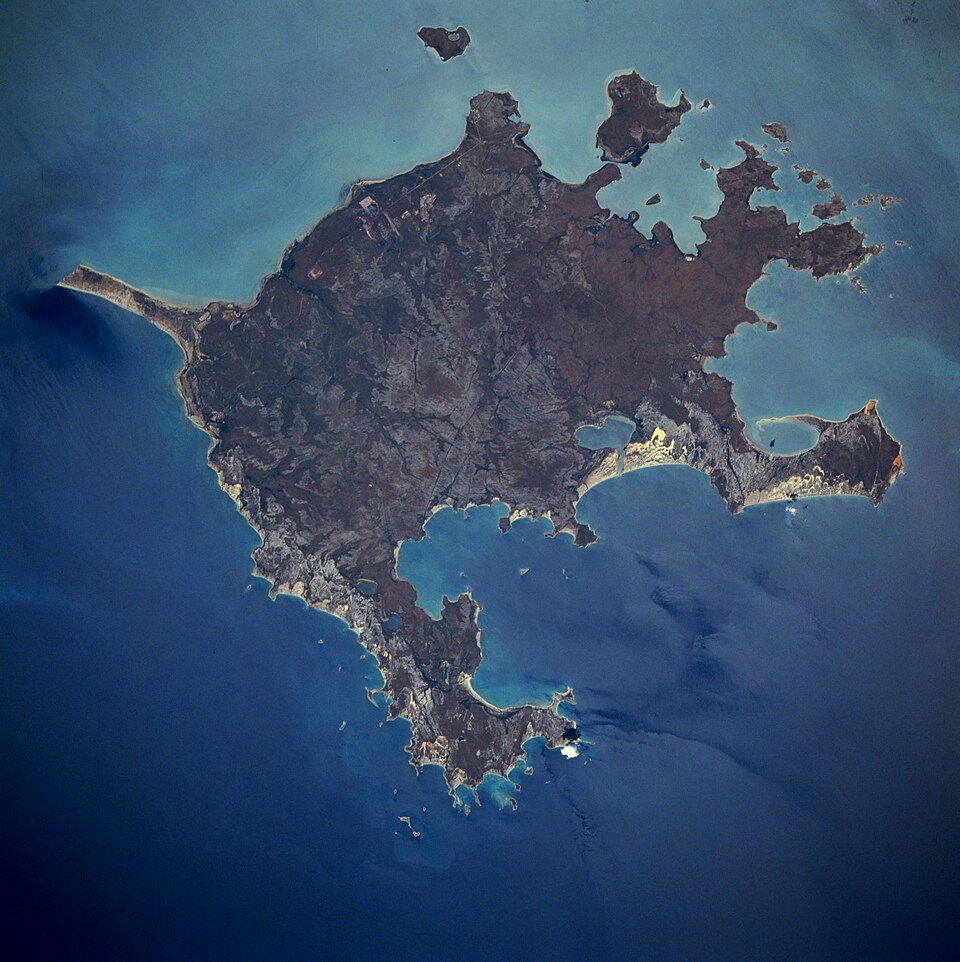
Groote Eylandt is the largest island in the Gulf of Carpentaria and the fourth largest island in Australia. It was named by the explorer Abel Tasman in 1644 and is Dutch for "large island" in archaic spelling. The modern Dutch spelling is Groot Eiland.
Angurugu is a community located on Groote Eylandt in the Northern Territory, Australia. The main spoken languages are Anindilyakwa, an Australian Aboriginal language, and English. Established as a Mission for the Church Mission Society, it is one of the three main indigenous settlements on the Groote Eylandt archipelago alongside Milyakburra and Umbakumba. According to the 2021 Census, the community had a population of 883.
Umbakumba is a community located on Groote Eylandt in the Gulf of Carpentaria, Northern Territory, Australia. The main spoken languages are Anindilyakwa, an Australian Aboriginal language, and English. There are also several Yolŋu Matha speakers. It is one of the three main settlements on the Groote Eylandt archipelago, including Milyakburra and Angurugu, where Anindilyakwa is the predominant spoken language. According to the 2016 Australian Census, the population of Umbakumba was 503, an increase from 441 in 2011.
More on First Nations Australians