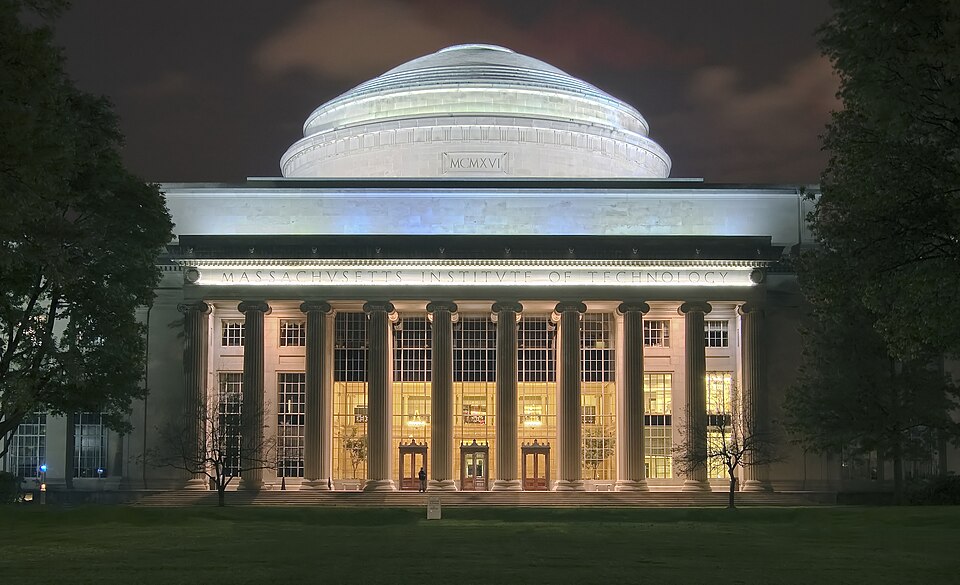
MIT debuts HardFlow, making generative follow strict safety constraints without retraining.
MIT unveiled HardFlow, a method that lets generative roam during creation but enforces strict constraints on the final output for safety‑critical tasks. It worked in robotics, physical‑process control, and computer vision.
It plugs into pretrained models at deployment with no retraining. Tests included diffusion systems like Stable Diffusion and flow‑matching models like FLUX.
The team reframed constraint‑satisfying sampling as trajectory‑optimization, then split the problem around big neural nets into many smaller, single‑step subproblems using efficient transformations and approximations.
HardFlow met final‑output constraints while finding better solutions than prior methods that forced every intermediate step to conform — like projection‑based sampling that can choke off exploration.
“Our approach lets us preserve that generative power while enforcing the nonnegotiable requirements,” said Navid Azizan. The work appears in IEEE Transactions on Pattern Analysis and Machine Intelligence.
Sources 2
Artificial intelligence (AI) is the capability of computational systems to perform tasks typically associated with human intelligence, such as learning, reasoning, problem-solving, perception, and decision-making. It is also a field of research spanning computer science, engineering, and mathematics that develops and studies methods and software enabling machines to perceive their environment and use learning and intelligence to take actions that maximise their chances of achieving defined goals.
More on Artificial intelligence