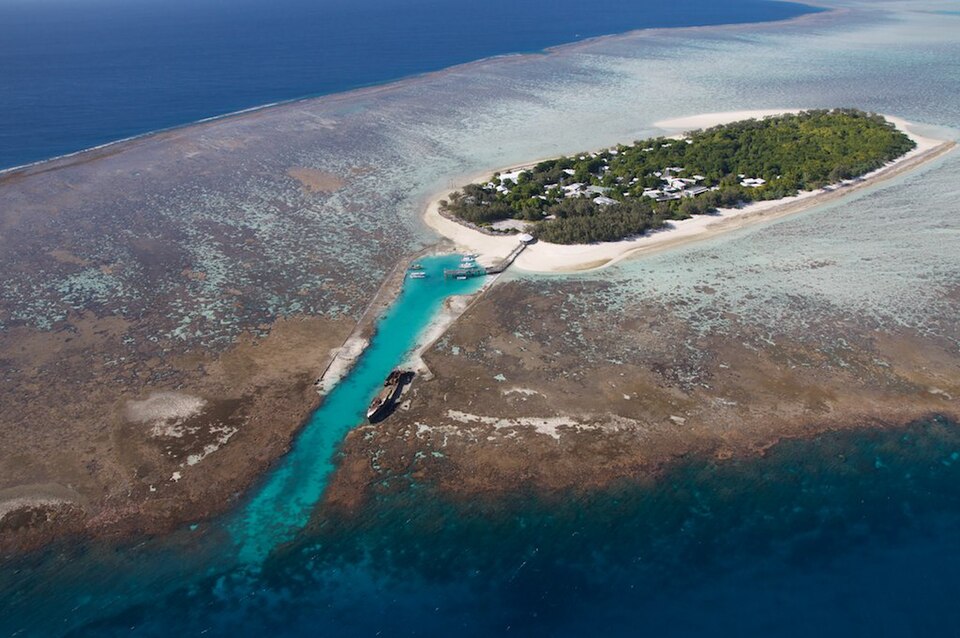
Almost all assessed shallow-water reef ecosystems face extremely high collapse risk by 2075.
The assessment puts 96% of assessed shallow-water reef ecosystems worldwide in that risk category when projected warming is included. It examined 127 ecosystems across more than 80 countries and territories.
All 17 regions, including the , fall into the category under that projection.
Ocean warming and increasingly frequent, prolonged marine heatwaves are the leading global threat. They bleach corals and make recovery between events harder.
Reefs support about a quarter of marine species and provide food, fisheries, tourism or coastal protection for millions of people.
IUCN director general Grethel Aguilar said it is not too late to give reefs a chance to recover, but doing so requires action on climate change and ocean warming.
Sources 3
- GEarth’s Shallow Coral Reefs May Have Just 50 Years LeftFri 23 Oct, 10:30pm↗
Gizmodo
- TAlmost every shallow-water coral reef on the planet faces ecosystem collapse by 2075, UN advisors sayThu 22 Oct, 11:00pm↗
The Guardian - Australia News
- MAustralian Coral Reefs Risk Collapse Within 50 Years, Assessment FindsThu 22 Oct, 11:00am↗
miragenews.com
About
The International Union for Conservation of Nature (IUCN) is an international organization working in the field of nature conservation and sustainable use of natural resources. Founded in 1948, IUCN has become the global authority on the status of the natural world and the measures needed to safeguard it. It is involved in data gathering and analysis, research, field projects, advocacy, and education. IUCN's mission is to "influence, encourage and assist societies throughout the world to conserve nature and to ensure that any use of natural resources is equitable and ecologically sustainable".
About
The Great Barrier Reef is the world's largest coral reef system, composed of over 2,900 individual reefs and 900 islands stretching for over 2,300 kilometres (1,400 mi) over an area of approximately 344,400 square kilometres (133,000 mi2). The reef is located in the Coral Sea, off the coast of Queensland, Australia. It is separated from the coast by a channel 160 kilometres (100 mi) wide in places and over 61 metres (200 ft) deep. The Great Barrier Reef can be seen from outer space and is the world's biggest single structure made by living organisms. This reef structure is composed of and built by billions of tiny organisms, known as coral polyps. It supports a wide diversity of life and was selected as a World Heritage Site in 1981. CNN labelled it one of the Seven Natural Wonders of the World in 1997. Australian World Heritage places included it in its list in 2007. The Queensland National Trust named it a state icon of Queensland in 2006.
About
Australia, officially the Commonwealth of Australia, is a country comprising the mainland of the Australian continent, the island of Tasmania and numerous smaller islands. It has a land area of 7,688,287 km2 (2,968,464 sq mi), making it the sixth-largest country in the world, and is the world's flattest and driest inhabited continent. It is a megadiverse country, and its size gives it a wide variety of landscapes and climates, including large deserts centrally and tropical rainforests along the coast.
More on United States · United Nations