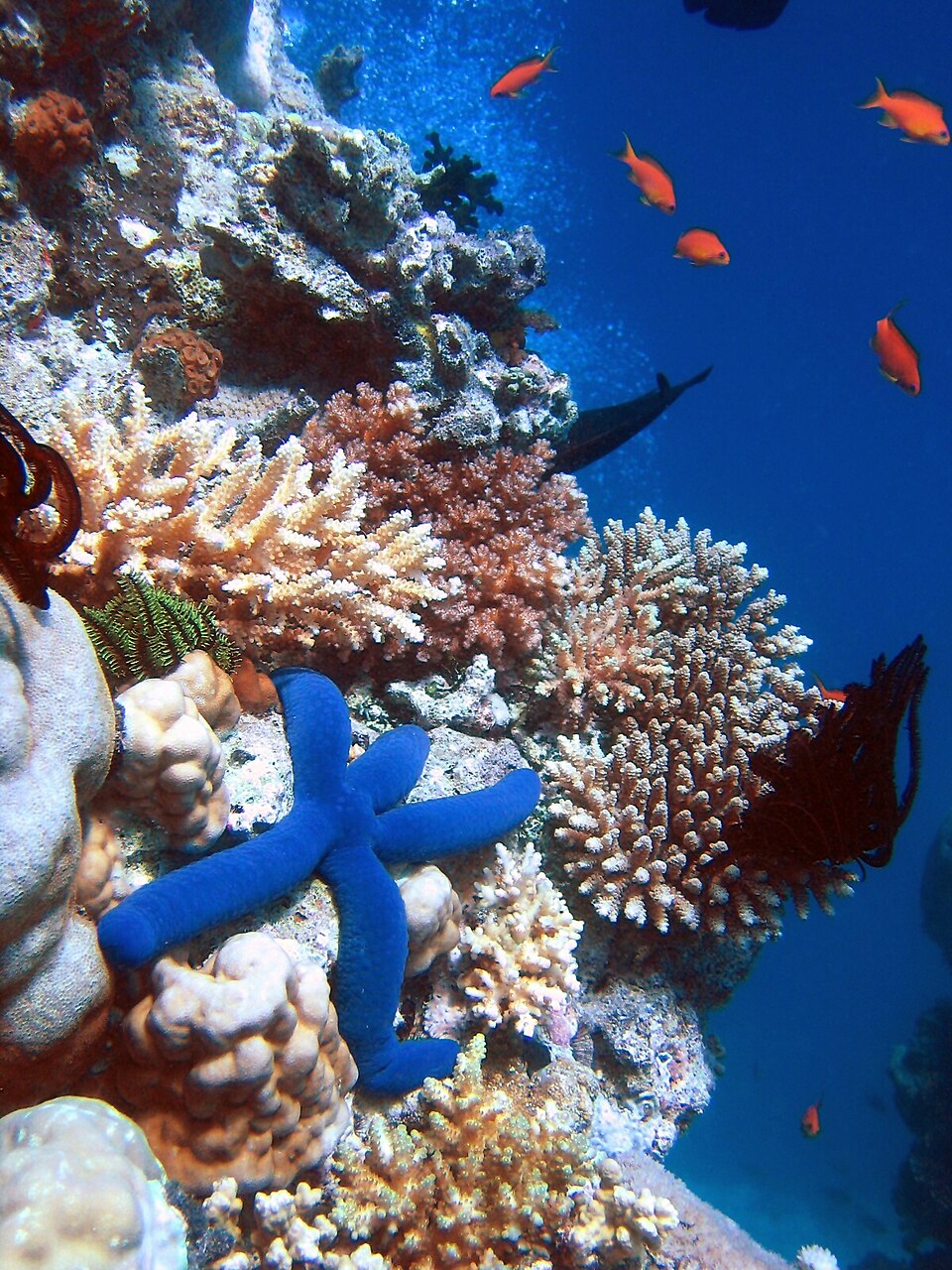
Active El Niño raises risk of mass coral bleaching on Great Barrier Reef during the biggest El Niño ever recorded.
New research finds that large-scale atmospheric patterns thousands of kilometres away can combine to stall the tropics' calm zones, the doldrums, over the and keep ocean temperatures higher for longer.
Scientists say the doldrums — areas of weak winds, reduced cloud cover and dry, descending air — suppress natural cooling and can contribute to marine heatwaves that trigger coral bleaching.
Researchers identify sequences of Rossby-wave-driven low‑pressure systems and a blocking high near that create unusual westerly winds and can make those doldrums persist rather than end.
Past mass bleaching on the happened in 1998, 2016 and 2024 during periods, and experts warn the current active El Niño raises the background threat of another harmful event.
Scientists including Dr Yi Huang and others say they are preparing to coordinate monitoring and response so they can fully understand how these weather systems and climate change continue to impact the reef.
Sources 2
About
El Niño–Southern Oscillation (ENSO) is a global climate phenomenon that manifests as fluctuations in sea surface temperatures over the tropical Pacific Ocean. The warming phase of the sea surface temperature is known as "El Niño" and the cooling phase as "La Niña". It affects the climate of much of the tropics and subtropics, and has links (teleconnections) to higher-latitude regions of the world. The Southern Oscillation is the accompanying atmospheric oscillation, which is coupled with the sea temperature change. Numerous atmospheric characteristics respond to the oscillation including wind, surface air pressure and cloudiness.
About
The Great Barrier Reef is the world's largest coral reef system, composed of over 2,900 individual reefs and 900 islands stretching for over 2,300 kilometres (1,400 mi) over an area of approximately 344,400 square kilometres (133,000 mi2). The reef is located in the Coral Sea, off the coast of Queensland, Australia. It is separated from the coast by a channel 160 kilometres (100 mi) wide in places and over 61 metres (200 ft) deep. The Great Barrier Reef can be seen from outer space and is the world's biggest single structure made by living organisms. This reef structure is composed of and built by billions of tiny organisms, known as coral polyps. It supports a wide diversity of life and was selected as a World Heritage Site in 1981. CNN labelled it one of the Seven Natural Wonders of the World in 1997. Australian World Heritage places included it in its list in 2007. The Queensland National Trust named it a state icon of Queensland in 2006.
About
The Coral Sea is a marginal sea of the South Pacific off the northeast coast of Australia, and classified as an interim Australian bioregion. The Coral Sea extends 2,000 kilometres (1,200 mi) down the Australian north-east coast to latitude 30° south. Most of it is protected between the French Natural Park of the Coral Sea and the Australian Coral Sea Marine Park. The sea was the location for the Battle of the Coral Sea, a major confrontation during World War II between the navies of the Empire of Japan, and the United States and Australia.
About
New Zealand is an island country in the southwestern Pacific Ocean. It comprises two main landmasses—the North Island and the South Island —and over 700 smaller islands. It is the sixth-largest island country by area and lies east of Australia across the Tasman Sea and south of the islands of New Caledonia, Fiji, and Tonga. The country's varied topography and sharp mountain peaks, including the Southern Alps, owe much to tectonic uplift and volcanic eruptions. New Zealand's capital city is Wellington, and its most populous city is Auckland.
More on New Zealand